SMM, March 5:
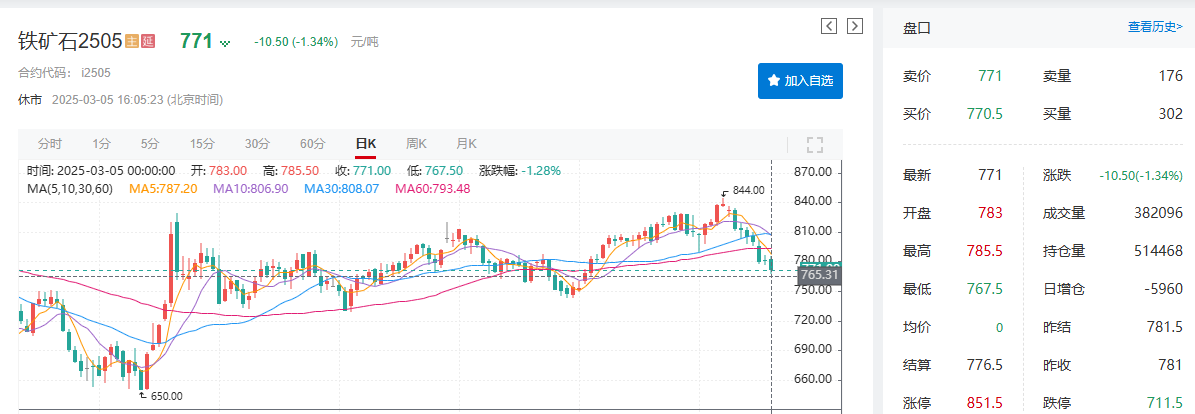
The US's aggressive tariff measures have heightened concerns over global economic growth prospects, cooling market preference for risk assets. Total iron ore shipments saw a significant MoM increase, while expectations of crude steel production cuts, anti-dumping duties imposed by Vietnam and South Korea on China's steel exports, and environmental protection-driven production restrictions leading to temporary shutdowns at some steel mills have collectively dampened market demand, putting pressure on iron ore prices. As of the close of the daytime session on March 5, iron ore prices fell by 1.34% to 771 yuan/mt, marking the eighth consecutive trading day of decline for the main iron ore futures contract.
》Click to view SMM Futures Data Dashboard
Fundamentals
Supply
》Click to view SMM Metal Industry Chain Database
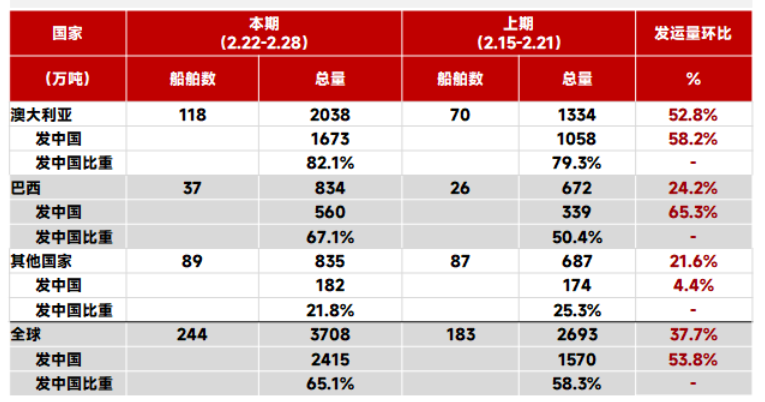
Supply side, according to SMM shipping data, global iron ore shipments totaled 37.08 million mt from February 22 to February 28, up 37.7% MoM. Shipments from Australia reached 20.38 million mt, up 52.8% MoM, with 16.73 million mt shipped to China, accounting for 82.1% of Australia's total shipments, up 58.2% MoM. Shipments from Brazil totaled 8.34 million mt, up 24.2% MoM, with 5.6 million mt shipped to China, accounting for 67.1% of Brazil's total shipments, up 65.3% MoM. The global iron ore supply remains relatively loose, and the recent recovery of shipments from Australia and Brazil to high levels, along with the significant MoM increase in iron ore shipments, has exerted supply-side pressure on iron ore prices.
Demand
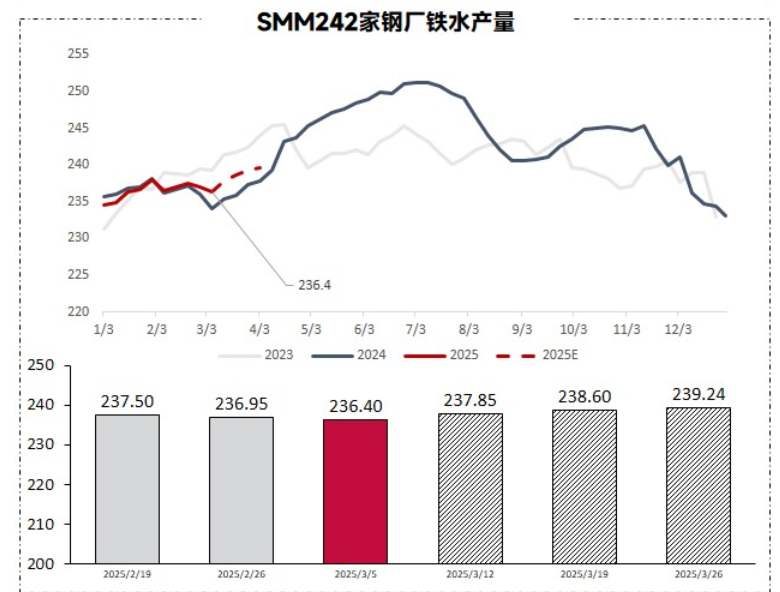
Demand side, environmental protection-driven production restrictions, cautious sentiment among steel mills, and moderate restocking activity have led to a decline in pig iron production, further pressuring iron ore prices. According to an SMM survey, as of March 5, the operating rate of blast furnaces at 242 surveyed steel mills was 86.33%, down 0.11 percentage points MoM. The capacity utilisation rate of blast furnaces was 87.61%, down 0.21 percentage points MoM. Daily average pig iron production at the sampled steel mills was 2.364 million mt, down 5,500 mt MoM. This week, some regions issued environmental protection-driven production restriction notices, causing short-term shutdowns at certain steel mills' blast furnaces, resulting in a slight downward trend in overall pig iron production.
Inventory
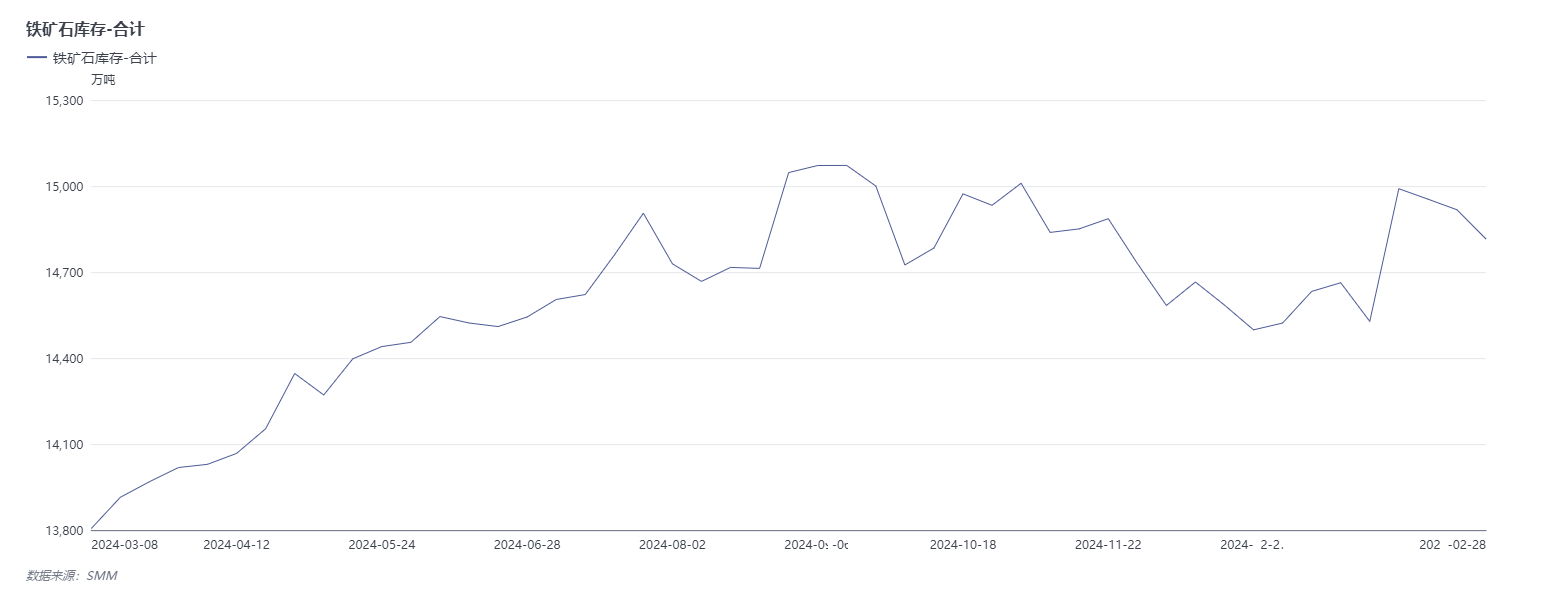
From February 22 to February 28, China's total iron ore port arrivals were 21.78 million mt, down 11.5% MoM, according to SMM data. As of February 28, SMM monitoring data showed that total inventory at 35 ports stood at 148.15 million mt, down 1.0192 million mt from the previous trading week. Although shipment data remains high, port arrivals have declined, and port inventory continues to maintain a destocking trend. This destocking support has limited the decline in iron ore prices.
Outlook
Looking ahead, on the macro front, attention will focus on the impact of tariff policies on market sentiment and the specific effects on steel exports. With the release of the government work report, the market will monitor the implementation of macroeconomic benefits related to the Two Sessions and their potential to improve end-user demand. Fundamentals side, as the industry enters the traditional peak season of March and April, pig iron production is expected to increase over the next three weeks. Improvements in demand may drive a rebound in iron ore prices as the market returns to fundamentals-driven trading logic. However, high shipment data and the continued loose supply-side conditions will likely limit the rebound's scope.
Institutional Views
Guosen Futures noted that in terms of supply and demand, iron ore supply remains high, inventory stays elevated, and on the demand side, with the peak season approaching, steel mill capacity is recovering, and pig iron production is expected to continue strengthening MoM. Short-term iron ore demand shows resilience, and inventory is likely to decline. Attention should focus on the strength of construction material demand during the peak season. If steel production increases but demand remains weak, imbalances in the steel market may accumulate. As the Two Sessions approach, market sentiment remains subdued.
Industrial Futures stated that with the escalation of Trump's tariff policies, market confidence in steel consumption has weakened. Since the Chinese New Year, steel mills have maintained a restrained pace of resumption and adopted a low raw material inventory strategy. Under these circumstances, the market's speculation on crude steel production reduction policies may further reinforce expectations of a supply surplus for imported iron ore in the distant months.
Yide Futures believes that recent market sentiment has largely focused on post-Two Sessions policy implementation. From a fundamentals perspective, after a period of rapid demand recovery, the market has entered a relatively stable state. Daily average pig iron production remains steady, reflecting a slow YoY recovery in steel production. Overall inventory remains relatively low YoY, with no significant imbalances. Overseas shipments have rapidly rebounded as earlier weather impacts have subsided, while downstream steel demand recovery remains slow, and no new bullish factors have emerged. In the short term, steel prices are expected to remain under pressure. Overall, the steel market's supply-increase and demand-weakness pattern has not shown significant improvement, and the market is expected to experience short-term fluctuations with a slightly bullish bias. Attention should focus on post-Two Sessions policy changes and further demand improvements.
Recommended Reading:
![Before the holiday, the black chain is unlikely to see a trend-driven market [SMM Steel Industry Chain Weekly Report].](https://imgqn.smm.cn/usercenter/zUFfM20251217171748.jpg)
![[SMM Chromium Daily Review] Inquiries and Transactions Weakened, Chromium Market Showed Mediocre Performance Before the Holiday](https://imgqn.smm.cn/usercenter/ENDOs20251217171718.jpg)